
Lightweight Magnesium Structural Housings for UAV Platform
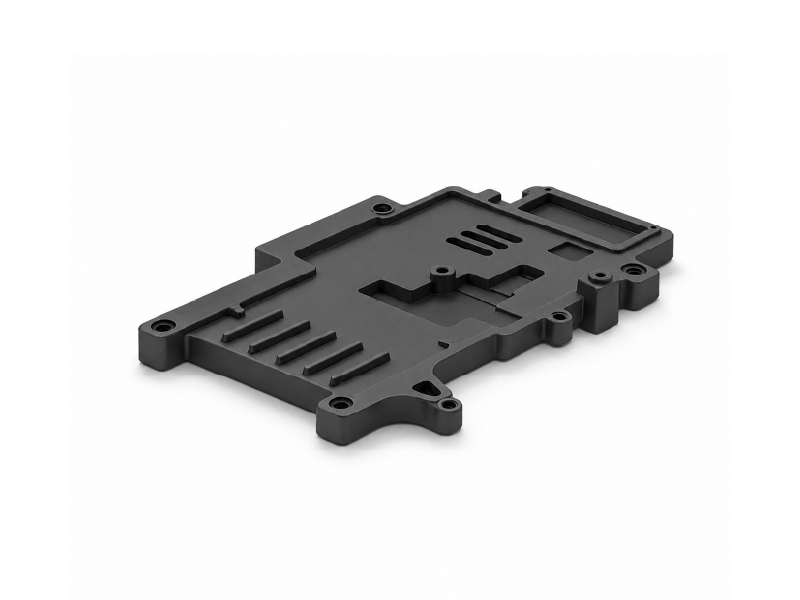
About the Case
Application: Micro UAV Platform
Product: Structural Housing / Motor Housing
Material: Magnesium Alloy AZ91D
Capabilities: Magnesium Die Casting, CNC Machining, Chromate Conversion Coating
Why Teamsworld
Customer Challenges:
A UAV manufacturer required an ultra-lightweight structural housing to maximize flight endurance without sacrificing mechanical strength. The housing needed to support sensitive electronic modules while maintaining dimensional stability, vibration resistance, and corrosion protection for outdoor environments. Because every gram directly impacts flight time, weight optimization was the highest priority.
Capabilities Leveraged:
Teamsworld recommended magnesium alloy AZ91D to replace heavier aluminum structures. Using precision magnesium die casting, our engineers optimized rib structures and wall thickness through DFM analysis to reduce unnecessary material while maintaining rigidity. Critical mounting surfaces were CNC machined to ensure assembly accuracy, and chromate conversion coating enhanced corrosion resistance for outdoor UAV applications.
Results:
The magnesium housing significantly reduced overall structural weight while maintaining excellent stiffness and dimensional stability.
The customer achieved:
Longer UAV flight endurance
Improved payload efficiency
Reliable structural performance
Stable mass production quali
FAQ
Q1: Why is magnesium alloy AZ91D used for UAV structural housings?
AZ91D magnesium alloy is widely used for UAV structural housings because it provides an excellent strength-to-weight ratio while reducing overall aircraft weight. Compared with aluminum, AZ91D is approximately 30% lighter, helping extend flight endurance and increase payload capacity. It also offers good dimensional stability, castability, and vibration resistance, making it ideal for lightweight drone structures.
Q2: What are the advantages of magnesium die casting for UAV components?
Magnesium die casting enables manufacturers to produce lightweight, complex UAV components with high dimensional accuracy and excellent structural performance. The process supports thin-wall designs, reduces secondary machining, and delivers consistent quality for high-volume production. It is commonly used for UAV structural housings, motor housings, and electronic enclosures where weight reduction is critical.
Q3: How does DFM improve magnesium housing manufacturing?
Design for Manufacturability (DFM) optimizes magnesium housing designs before tooling begins. Engineers analyze rib structures, wall thickness, draft angles, and machining allowances to improve mold filling, reduce defects, and increase production efficiency. DFM also helps minimize weight while maintaining structural rigidity and assembly accuracy, resulting in more reliable UAV components.