
Lightweight High-Rigidity Automotive Transmission Housings
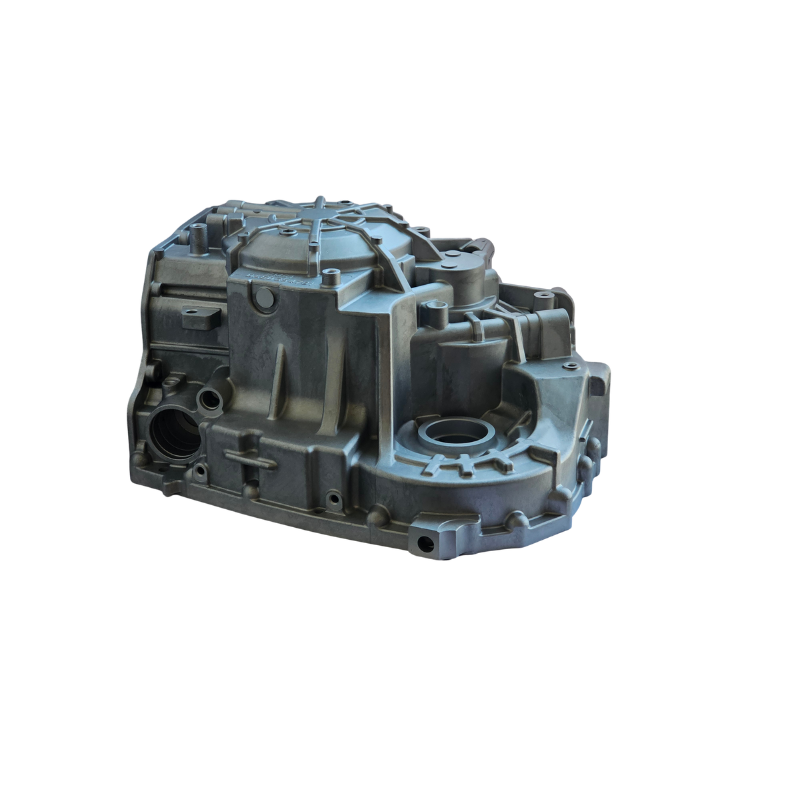
About the Case
Application: Automotive Powertrain / Transmission Systems
Product: Transmission Housing
Material: ADC12 Aluminum Die Casting Alloy
Capabilities: Large-Scale Thin-Wall Casting, DFM Structural & Rib Optimization, Advanced Mold Flow Simulation, High-Precision CNC Machining
Teamsworld specializes in automotive powertrain solutions, utilizing ADC12 aluminum die casting alloy to manufacture lightweight, high-rigidity transmission housings to address NVH (Noise, Vibration, and Harshness) challenges
Why Teamsworld
Customer Challenges:
The transmission housing is a large-scale casting characterized by complex geometries and a network of structural ribs designed to endure heavy transmission torque. The client faced a dual-priority challenge: significantly reducing the component's mass to meet vehicle efficiency targets without compromising structural rigidity or NVH (Noise, Vibration, and Harshness) performance. The engineering difficulty lay in balancing the variable wall thicknesses and draft angles required for a one-piece, large-scale casting.
Capabilities Leveraged:
Teamsworld provided specialized expertise in large-scale thin-wall die casting and structural optimization. Our engineering team focused on several critical technical domains:
DFM & Rib Optimization: We re-engineered the rib distribution and thickness to maximize the moment of inertia, ensuring the housing could handle peak torque loads while stripping away non-functional mass.
Advanced Venting & Porosity Control: For large castings, air entrapment is a major risk. We utilized specialized vacuum-assisted venting designs to eliminate internal porosity, ensuring the casting remained airtight and structurally sound.
Precision CNC & Dimensional Metrology: Given the housing’s size, maintaining tight tolerances for bearing seats and mounting faces is challenging. We utilized high-precision CNC centers and 100% CMM inspection to ensure absolute dimensional accuracy and interface alignment.
Results:
By engaging in the early development phase, Teamsworld delivered a comprehensive structural optimization solution. Through iterative mold flow simulations and stress analysis, we optimized the distribution of structural ribs to achieve an optimal balance between high rigidity and mass reduction. The final solution provided a durable, lightweight housing that enhanced overall powertrain performance and supported the client’s sustainability goals, setting a new standard for their future vehicle platforms.
FAQ
Q: What material is used for the automotive transmission housing?
A: Teamsworld uses ADC12 Aluminum Die Casting Alloy. This material helps significantly reduce the component's mass without compromising structural rigidity or NVH (Noise, Vibration, and Harshness) performance.
Q: How do you prevent internal porosity in large-scale castings?
A: Teamsworld utilizes specialized vacuum-assisted venting designs to eliminate internal porosity, ensuring the large transmission housing remains airtight and structurally sound.
Q: How do you ensure the structural rigidity of lightweight transmission housings?
A: Through DFM and rib optimization. Teamsworld re-engineered the rib distribution and thickness to maximize the moment of inertia, ensuring the housing can handle peak torque loads while stripping away non-functional mass.
